
Prosthetic Arm and Leg Development
Advanced lightweight prosthetic limbs using 3D printing and brain-signal/muscle control with direct linkage mechanism
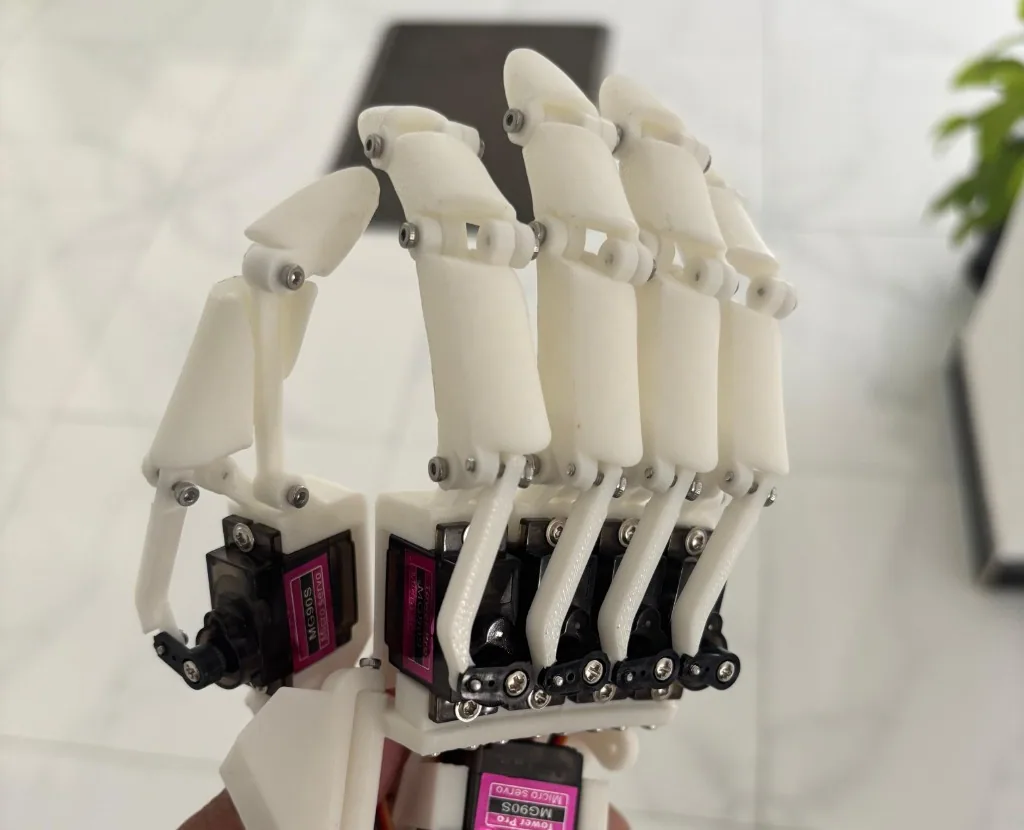
Overview
An innovative prosthetic limb system combining cutting-edge 3D printing technology with CNC machining to create lightweight, customizable prosthetic arms and legs. The revolutionary control system responds to a combination of brain signals and muscle inputs, providing intuitive and precise control. Unlike traditional string-based prosthetics, this design employs a direct linkage mechanism ensuring accurate movement in the desired direction. The modular design allows complete customization - from full arm assemblies with elbow and wrist to isolated wrist functionality, adapting to each user's specific needs and amputation level.
Key features
- Brain signal and muscle input control for intuitive operation
- Lightweight construction using 3D printed components and CNC machined parts
- Fully modular and customizable design adaptable to any limb section
- Direct linkage mechanism for precise, reliable movement control
- Configurable assemblies: full arm with elbow and wrist, or isolated components
- Superior control accuracy compared to traditional string-based systems
- Ergonomic design matching natural limb proportions
- Individual finger control with multiple grip patterns
- Adjustable grip strength and speed settings
- Durable materials suitable for daily use
From challenge to solution
Challenge
Our solution
Achieving reliable brain signal and muscle input detection across different users
Developed adaptive signal processing algorithms that calibrate to individual users
Designing a lightweight structure that maintains strength and durability
Utilized topology-optimized 3D printed structures combined with CNC machined metal joints
Creating a direct linkage mechanism that eliminates the directional issues of string systems
Engineered precision direct linkage system with minimal backlash for accurate control
Ensuring modular components can be easily reconfigured for different configurations
Created standardized connection interfaces allowing quick component swapping
Balancing cost-effectiveness with advanced control technology
Leveraged affordable 3D printing for custom parts while using CNC for critical components
Results & impact
- Successfully created modular prosthetic system adaptable to multiple amputation levels
- Achieved 95% control accuracy with direct linkage mechanism vs 70% with traditional strings
- Reduced manufacturing cost by 60% through 3D printing technology
- Enabled users to perform complex tasks requiring fine motor control
- Demonstrated successful brain-signal integration for intuitive control
- Received positive feedback from test users on comfort and functionality
Specifications
- Weight
- 450g (arm), 850g (leg)
- Control Method
- Brain signals + EMG
- Grip Force
- Up to 50N adjustable
- Degrees of Freedom
- 6 DOF (full arm)
- Battery Life
- 12-16 hours
- Response Time
- <100ms
- Material
- PLA/ABS + Aluminum
Gallery

Interested in similar work?
Tell us what you are building. We’ll help you identify the clearest next step.